
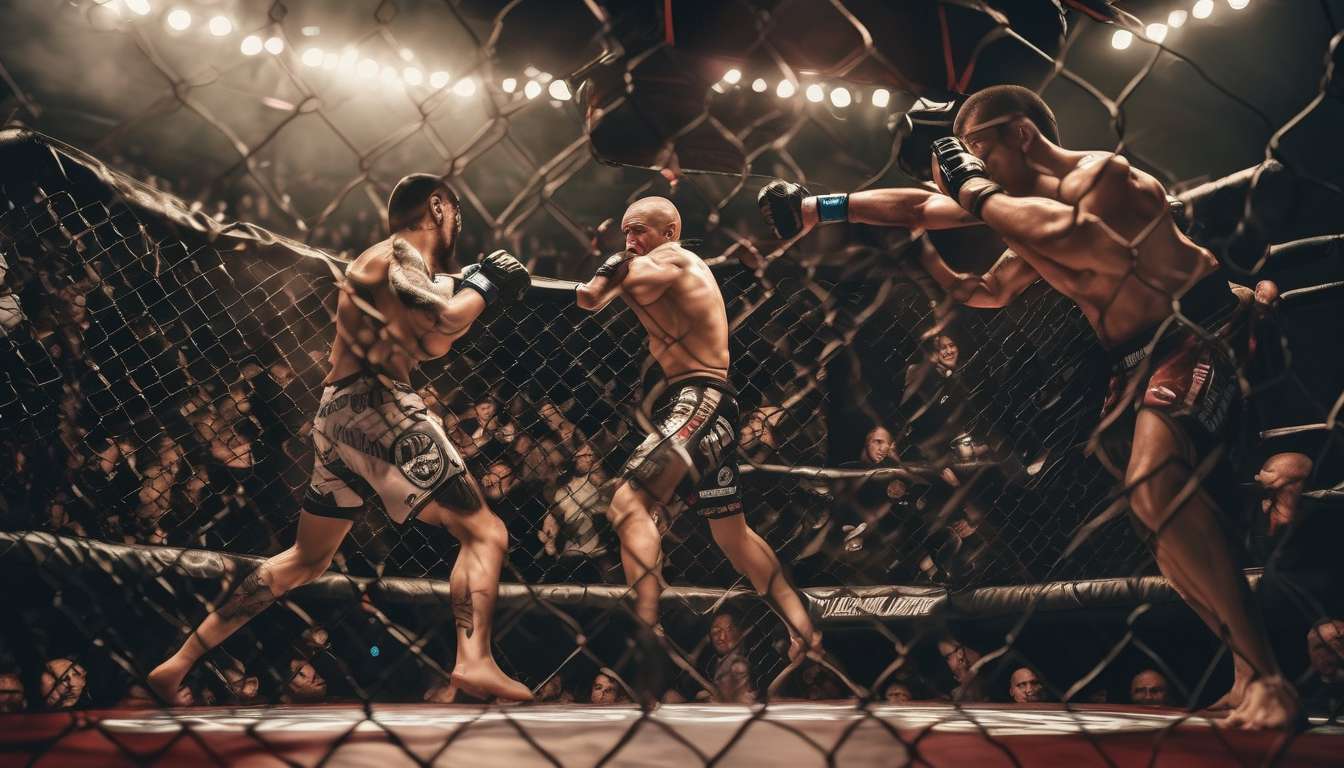
In the world of mixed martial arts, we often debate the nuances that might influence the outcome of a fight. One topic that continually stirs conversation is the size of the cage. Does the octagon’s dimensions play a role in determining a fighter’s strategy or even the final result?
As enthusiasts and analysts, we have witnessed how cage size can transform the dynamics of a bout, potentially favoring fighters with specific styles and strategies.
- Larger octagons might give elusive fighters more room to maneuver.
- Smaller cages often force confrontations, favoring aggressive strikers and grapplers who thrive on close-quarters combat.
Our exploration aims to delve into the data, examining past fights to discern any patterns or trends that might reveal how these dimensions impact fight outcomes.
By understanding these elements, we hope to gain deeper insights into how the environment shapes the high-stakes world of MMA.
Exploring Cage Size Impact
Numerous studies show that cage size significantly affects animal behavior and welfare. This concept is similarly applicable to the world of mixed martial arts (MMA), where the dimensions of the octagon can influence fighters’ behavior and strategies.
When we consider the octagon dimensions in MMA, it’s clear how these factors can influence not just animals, but fighters too. As fans of the sport, we understand that the space where combatants engage plays a crucial role in shaping the fight.
In a smaller octagon, we notice how it naturally encourages more close-quarters combat. This setup forces fighters to:
- Adapt their strategies
- Engage more frequently
- Rely on precise techniques
We’ve all seen how a fighter’s strategy shifts when confined to tighter quarters. In these situations, the pace often quickens, and the necessity for precise technique becomes paramount.
Our shared love for the sport lets us appreciate how these dynamics unfold during a match, creating a more intense and engaging experience. By understanding the impact of octagon dimensions, we deepen our connection to the fighters and the thrilling world of mixed martial arts.
Influence on Fighter Strategy
The Impact of Octagon Size on Fighter Strategy
We’ve observed how the octagon’s size directly shapes the strategies fighters employ during a match.
Small Octagon
When the octagon dimensions are smaller, it creates an environment that naturally encourages close-quarters combat. This setting often leads to more aggressive exchanges as fighters have limited space to maneuver.
- Fighters focus on quick strikes and grappling.
- There’s less room to retreat or evade.
Large Octagon
Conversely, a larger octagon allows for different fighter strategies to emerge. Here, fighters are more likely to leverage the additional space to maintain distance, picking their moments to engage.
- Results in a more tactical approach.
- Patience and timing play crucial roles.
Strategic Adaptation
We notice that fighters adapt their game plans based on the octagon dimensions, showing versatility in their approach.
Ultimately, the size of the octagon doesn’t just dictate the pace of a fight, but also the very strategies that fighters must adopt to succeed, bringing a unique strategic depth to each bout.
Implications for Elusive Fighters
Elusive fighters thrive in larger octagons, where they can effectively utilize their evasive maneuvers and footwork to control the pace of the fight. With more space, they can execute their fighter strategy, dancing around opponents and avoiding close-quarters combat.
As a community that values skill and finesse, we appreciate how these fighters can showcase their talents in expansive settings. In larger octagons, the dimensions allow these athletes to operate at their best, keeping opponents at bay while dictating the rhythm and flow of the bout.
It’s a thrilling dance we all find mesmerizing, as they transform the space into a canvas showcasing their agility and quick thinking.
For elusive fighters, octagon dimensions significantly impact their ability to shine. They rely on having ample room to maneuver and strategize, avoiding the pressure of being cornered.
Together, we recognize and celebrate the artistry and strategy that these fighters bring to the sport, elevating our shared experience.
Advantages in Smaller Octagons
In smaller octagons, fighters often find more opportunities to engage in intense, close-range battles that test their strength and resilience. The reduced octagon dimensions naturally foster a sense of unity among those who appreciate the raw, unfiltered nature of the sport. Fighters adapt their strategies to make the most of these constrained spaces, emphasizing aggressive tactics and quick decision-making.
Smaller cages challenge us to rethink fighter strategy as the action unfolds almost immediately. The limited space means there’s little room for error, encouraging fighters to stay alert and ready to engage. This environment pushes them to develop skills in close-quarters combat, where every punch, kick, and grapple can be decisive.
As spectators, we become part of the experience, feeling the intensity of each moment. We cheer together as fighters showcase their adaptability and heart, creating a shared sense of belonging. Smaller octagons bring us closer to the thrill of the fight, making every encounter memorable.
Dissecting Close-Quarters Combat
In close-quarters combat, we witness how fighters rely on split-second decisions and physical prowess to dominate their opponents. The intimacy of the octagon’s dimensions can intensify these encounters, with each fighter’s strategy evolving to suit the confined space. Fighters use every inch of the smaller octagon to their advantage, favoring techniques that:
- Maximize control
- Minimize their opponent’s escape routes
Fighter strategy becomes paramount in these moments. They must:
- Anticipate movements
- Shift seamlessly from defense to offense
- Adapt to the rapid pace that close-quarters combat demands
The octagon dimensions create a unique dynamic where fighters feel the crowd’s energy, pushing them to dig deep and showcase their skills.
Together, we understand that these dimensions don’t just shape the fight; they craft a narrative of resilience and adaptability. We, as fans and enthusiasts, become part of this exhilarating story, appreciating the intricacies that make each bout unforgettable.
In this shared experience, we find our belonging.
Analyzing Past Fight Data
We’ve delved into numerous fight records to uncover how cage size influences fighters’ performance and outcomes. By analyzing data, a pattern emerges where octagon dimensions play a crucial role in shaping fighter strategy.
In larger cages, fighters often employ strategies that rely on movement and distance, effectively using the space to their advantage. Conversely, smaller cages encourage more close-quarters combat, pushing fighters into high-pressure situations where agility and quick decision-making become paramount.
Key Observations:
-
Fighters with a preference for grappling and clinching seem to thrive in smaller octagons:
- The reduced space limits their opponent’s ability to evade.
- Allows them to dominate in close-quarters combat.
-
Strikers often benefit from larger octagons:
- Use the additional space to maintain range.
- Control the tempo of the fight.
By scrutinizing past bouts, we gain insights into how octagon dimensions can impact the dynamics of a fight, shaping not only outcomes but the very essence of fighter strategy.
Patterns in Cage Size Effects
Trends in Cage Size and Fight Dynamics
We’ve noticed that certain trends consistently emerge when examining how different cage sizes affect fight dynamics. Octagon dimensions play a crucial role in shaping fighter strategy.
Strategies in Larger Cages:
In larger cages, fighters often adopt strategies that emphasize:
- Movement
- Distance
This approach allows them to exploit their reach and agility, creating opportunities for precise strikes without engaging in close-quarters combat.
Strategies in Smaller Cages:
On the other hand, smaller cages naturally foster more:
- Intense, immediate engagements
Fighters with skills in grappling or wrestling tend to thrive in these tighter spaces, where evasion is limited and confrontations are inevitable.
Impact on Perception and Appreciation:
This pattern not only influences individual matchups but also affects how we, as a community, perceive the essence of a fight.
- Are we drawn to the technical, strategic battles of larger octagons?
- Or do we revel in the raw, visceral encounters within smaller confines?
Understanding these patterns offers us a deeper appreciation of the sport we love, creating a shared narrative that connects us as devoted fans of MMA.
Insights for MMA Environment
Analyzing Cage Size
Analyzing cage size offers us valuable insights into how different environments shape fighter behavior and influence match outcomes. Octagon dimensions play a crucial role in determining the flow of a fight.
Smaller Cages:
- We are more likely to witness close-quarters combat.
- Fighters are forced to adapt their strategies.
- Benefits those skilled in grappling and clinch work due to less space for opponents to evade these techniques.
Larger Octagons:
- Provide room for fighters who excel at striking and maintaining distance.
- Encourage more footwork and strategic maneuvering.
- Allow fighters to craft a game plan reliant on patience and precision.
These insights into octagon dimensions help us appreciate the diversity within MMA and understand why some fighters thrive in specific settings.
Connection to the Sport
By recognizing how each environment influences fighter strategy, we become more connected to the sport. It’s not just about the fighters; it’s about how the cage itself becomes a pivotal participant in every match.
What are the standard dimensions for UFC octagons, and how do they vary across different organizations?
Standard Dimensions for UFC Octagons
The standard dimensions for UFC octagons typically range from 20 to 30 feet in diameter.
UFC’s Octagon Size
- The UFC primarily uses a 30-foot octagon for most of its events.
- This larger size is believed to offer more space for fighters to showcase their skills effectively.
Variations in Other Organizations
- Other promotions may use different octagon sizes, often smaller than the UFC’s standard.
- These variations can impact how fighters navigate the cage during matches.
Understanding these dimensions provides insights into the strategic movement and techniques fighters employ within the cage.
How does cage size impact the overall viewership and audience experience during a fight?
Cage Size and Audience Experience
We believe cage size plays a significant role in shaping the overall viewership and audience experience during a fight.
Larger Cage:
- Provides more space for fighters to maneuver.
- Potentially leads to more action-packed exchanges.
- Offers a more engaging viewing experience.
Smaller Cage:
- Creates a more intense and claustrophobic environment.
- Adds to the excitement for viewers.
Both sizes offer unique experiences, impacting how audiences perceive and enjoy the fight.
Are there any safety concerns associated with different cage sizes for fighters?
Prioritizing Fighter Well-being
When addressing safety concerns related to cage sizes for fighters, the primary focus should be on the well-being of the athletes.
Importance of Adequate Space
Ensuring that the octagon dimensions provide enough space is crucial for:
- Allowing fighters to move freely.
- Avoiding unnecessary injuries.
Impact of Cage Size on Safety
By considering how cage size affects fighter safety, we can:
- Create a better environment for competitive bouts.
- Minimize risks of harm during matches.
Ultimately, the goal is to ensure that both the physical health and competitive integrity of the fighters are maintained.
Conclusion
In conclusion, the size of the octagon in MMA has a significant impact on fighter outcomes and strategies.
Smaller cages:
- Benefit more aggressive fighters.
Larger cages:
- May favor those who utilize movement and distance.
By analyzing past fight data and patterns, it becomes clear that cage size plays a crucial role in shaping the dynamics of close-quarters combat.
These insights provide valuable considerations for fighters and organizations in optimizing the MMA environment.